minimum-thickness-embossed-aluminium-sheet-stair-applications
Quick Summary
For high-traffic stair applications, embossed aluminium sheet should be a minimum of 2mm thickness. Light commercial stairs require 2mm, standard factory and warehouse stairs need 2.5mm to 3mm, and heavy industrial platforms require 3mm to 4mm. This guide covers thickness selection, alloy grades, and embossing patterns for every stair application type.
In This Article
- • What Is the Minimum Thickness of an Embossed Aluminium Sheet Used in High Traffic Stair Applications?
- • Thickness Guide by Application Type
- • Why Thickness Matters Beyond Just Load Capacity
- • Aluminium Alloy Grade Also Matters
- • Common Embossing Patterns for Stair Applications
What Is the Minimum Thickness of an Embossed Aluminium Sheet Used in High Traffic Stair Applications?
Choosing the wrong thickness for stair tread applications is one of the most common and costly mistakes in industrial and commercial fabrication. Too thin and the sheet deflects under load, loses its embossed pattern depth over time, and becomes a safety risk. Too thick and you add unnecessary weight and cost.
This guide covers the minimum thickness recommendations for embossed aluminium sheets used in stair applications — from light commercial use to heavy industrial environments.
For high-traffic stair applications, the minimum recommended thickness for an embossed aluminium sheet is 2mm. For heavy industrial or load-bearing stairs, 3mm to 4mm is the standard. Anything below 1.5mm is only suitable for decorative or very low-footfall use.
Thickness Guide by Application Type
Light commercial use — 1.5mm to 2mm
Suitable for:
- Office building stair treads (interior, dry conditions)
- Retail mezzanine stairs with moderate foot traffic
- Residential staircases with occasional use
- Decorative wall panels near stair areas
At this thickness, aluminium retains its embossed pattern well and provides adequate anti-slip performance under normal pedestrian load. It is not recommended for wet environments or continuous heavy use.
Medium commercial and industrial use — 2mm to 3mm
Suitable for:
- Warehouse access stairs
- Factory mezzanine and platform stairs
- Commercial buildings with continuous daily foot traffic
- Stair treads in schools, hospitals, and public buildings
- Outdoor covered stair applications
This is the most commonly used thickness range for industrial stair tread plates in India. At 2.5mm, embossed aluminium provides a good balance between weight, rigidity, and surface grip performance.
Heavy industrial and high-load use — 3mm to 4mm+
Suitable for:
- Heavy machinery access platforms
- Truck body and vehicle entry stairs
- Port and logistics facility stairways
- Cold storage and food processing plant stairs
- Any environment with equipment, trolleys, or heavy loads on stairs
At 3mm and above, embossed aluminium sheet handles significant point loads without deflection. Pattern depth is maintained even after years of continuous use.
Why Thickness Matters Beyond Just Load Capacity
Most buyers focus only on whether the sheet holds weight. But thickness affects four things at once:
Pattern retention — Thinner sheets lose emboss depth faster under repeated impact and foot traffic. A 1mm sheet may look worn within months in a busy factory. A 3mm sheet holds pattern geometry for years.
Deflection under load — A sheet that flexes when stepped on creates both a safety risk and a noise problem. Minimum deflection requires adequate thickness combined with proper support spacing underneath.
Fixing and installation — Thinner sheets are harder to drill, bolt, and weld without distortion. For stair tread installation with countersunk bolts, 2mm is generally the minimum workable thickness.
Edge durability — The exposed front edge of a stair tread takes the most wear. Thinner sheets develop visible edge wear, sharp deformation, or cracking at the nose within 12–18 months in high-traffic areas.
Aluminium Alloy Grade Also Matters
Thickness alone doesn't tell the full story. The alloy grade affects hardness, corrosion resistance, and emboss quality.
1100 series — Commercially pure aluminium. Softer, easier to emboss, but lower strength. Suitable for light-use indoor stair treads at 2mm+.
3003 series — Good corrosion resistance, moderate strength. Widely used for general industrial stair treads. Common in India for factory and warehouse applications.
5052 series — Higher strength and excellent corrosion resistance. Recommended for outdoor, wet, marine, and chemically exposed environments. Used at 2mm–3mm for demanding stair applications.
For most Indian industrial applications, 3003 or 5052 alloy at 2mm to 3mm thickness is the practical standard for embossed aluminium stair sheets.
Common Embossing Patterns for Stair Applications
Not all embossed patterns perform equally on stairs. The pattern geometry affects grip under different conditions.
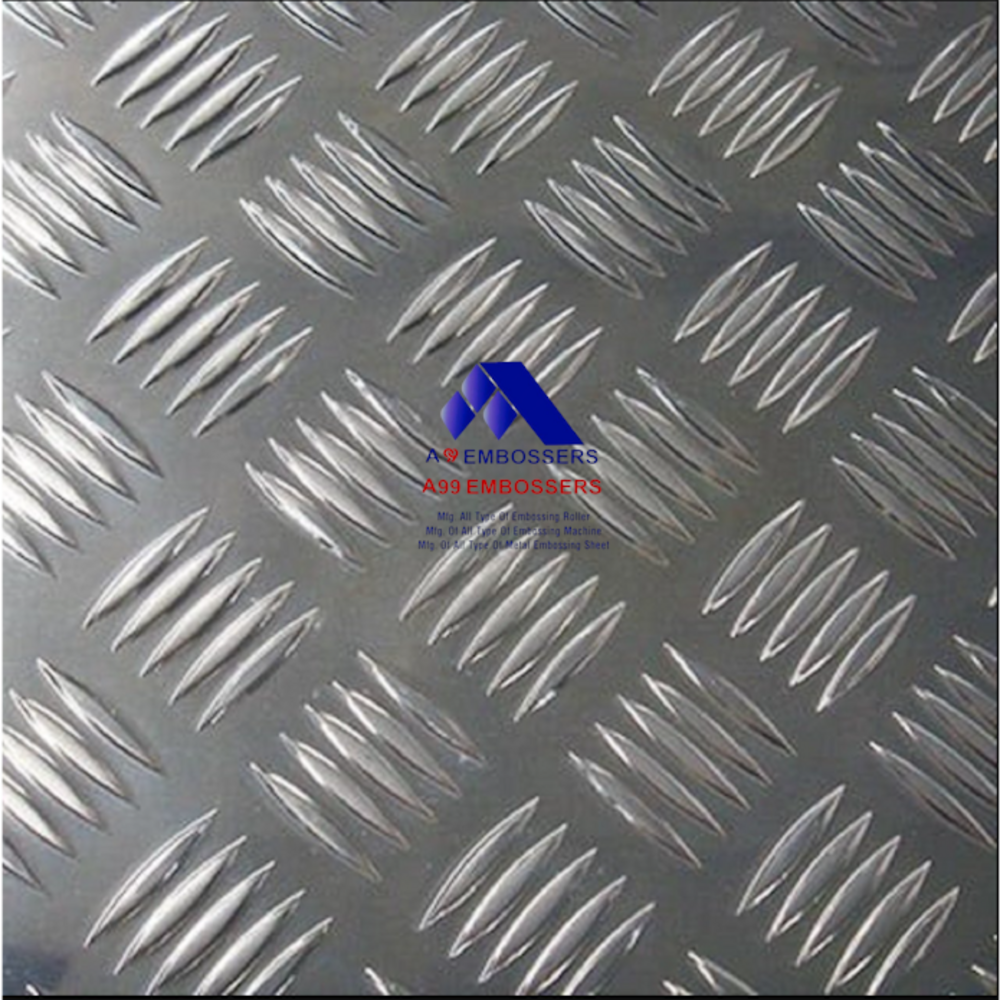
Checkered / diamond pattern — The most common for stair treads. Raised diamond or lozenge shapes provide omnidirectional grip. Suitable for all standard stair applications.
Five-bar tread pattern — Linear raised bars running across the tread width. Good for directional foot traffic but less effective on angled or turning stairs.
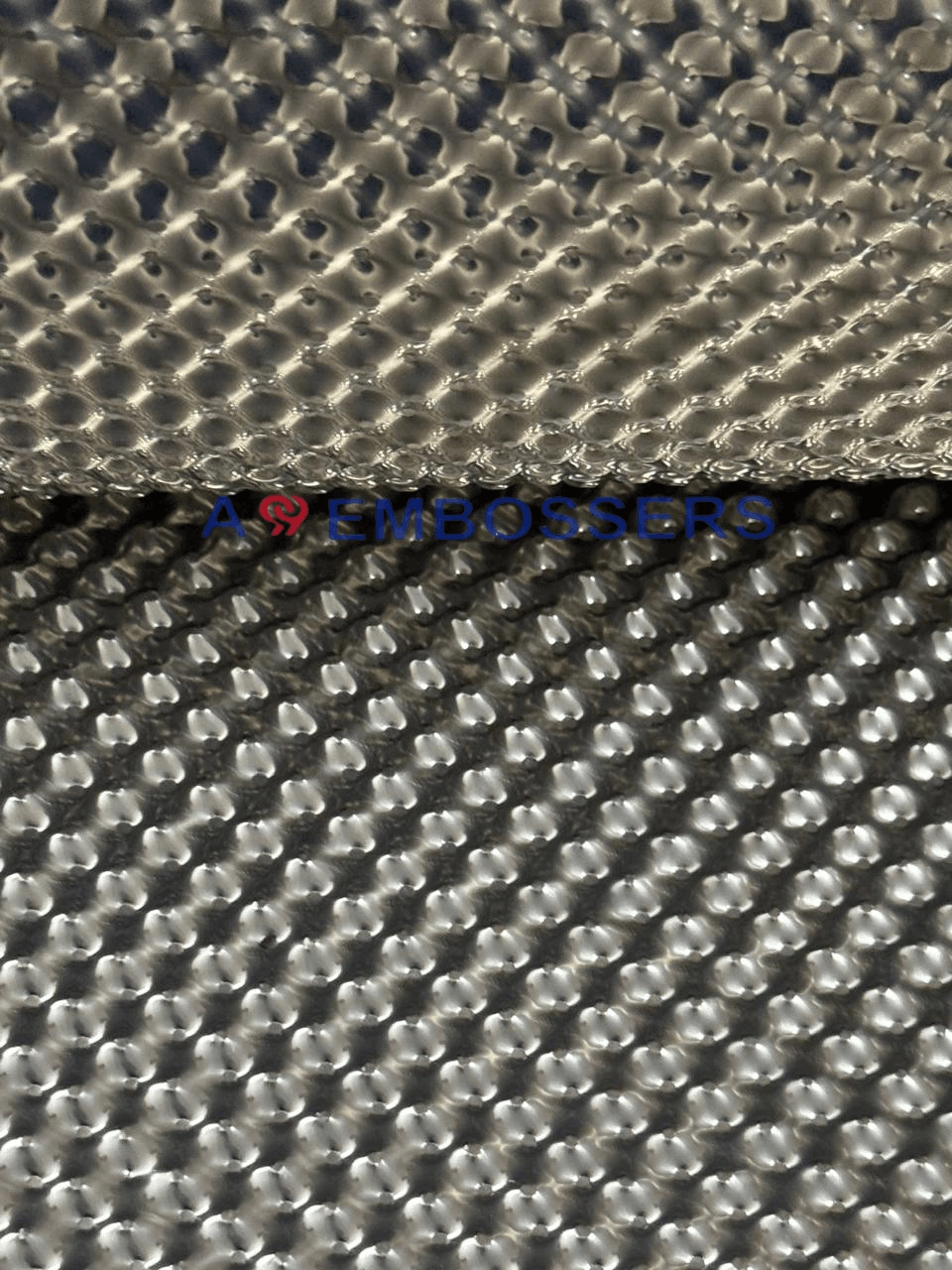
Hemisphere / button pattern — Rounded raised dots. Good aesthetic finish for commercial environments. Slightly lower grip than checkered under wet or oily conditions.
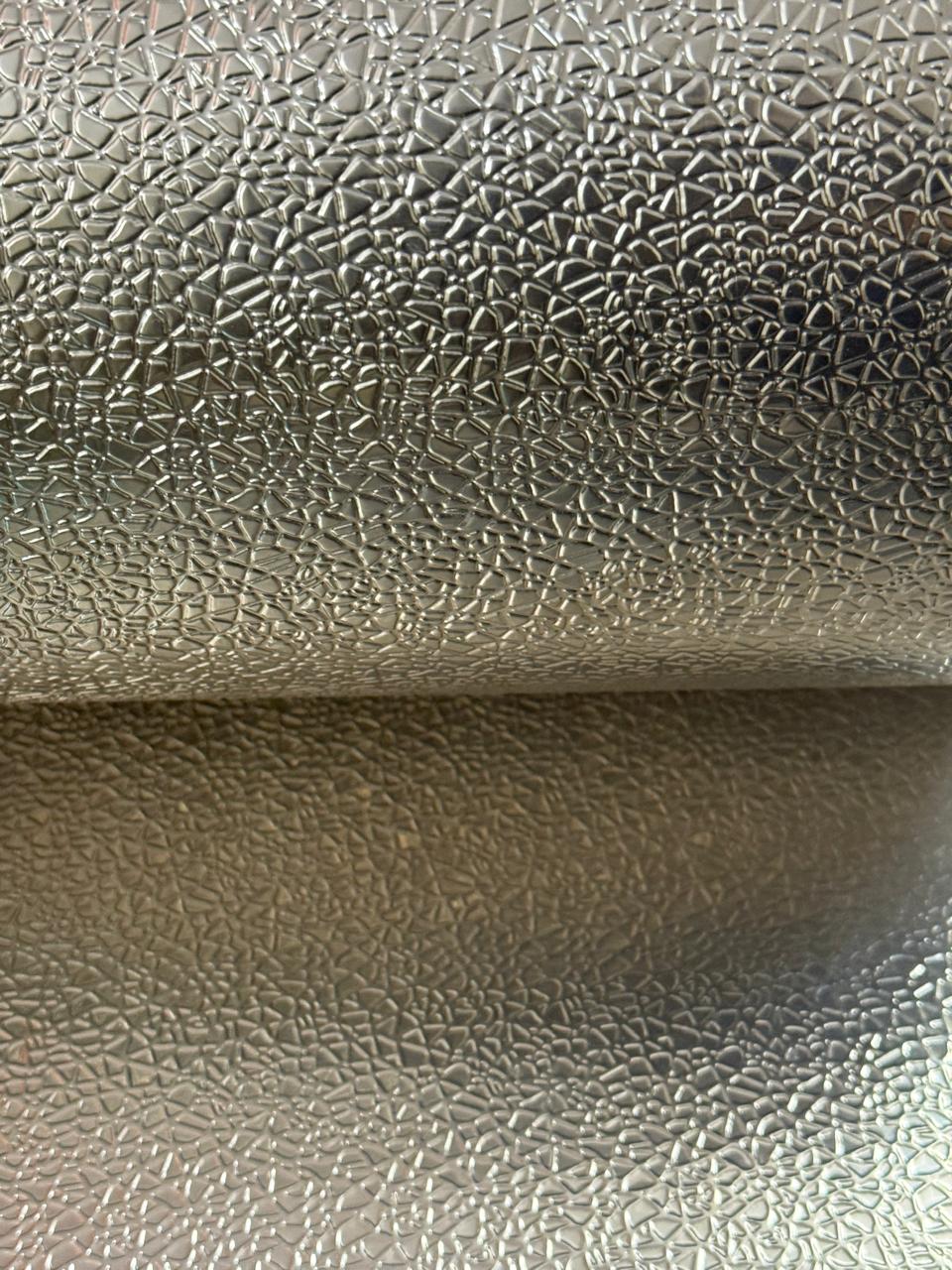
Lentil / tear-drop pattern — Common in SS and aluminium coil embossing. Provides moderate grip. Used in decorative and light-duty applications.
For high-traffic industrial stairs, checkered or five-bar patterns at 2.5mm to 3mm thickness offer the best combination of safety and durability.
Also Check: https://a99embossers.com/product/checkered-embossed-sheets , https://a99embossers.com/product/embossed-aluminium-sheet , https://a99embossers.com/product/checkered-plate-embossing-machine